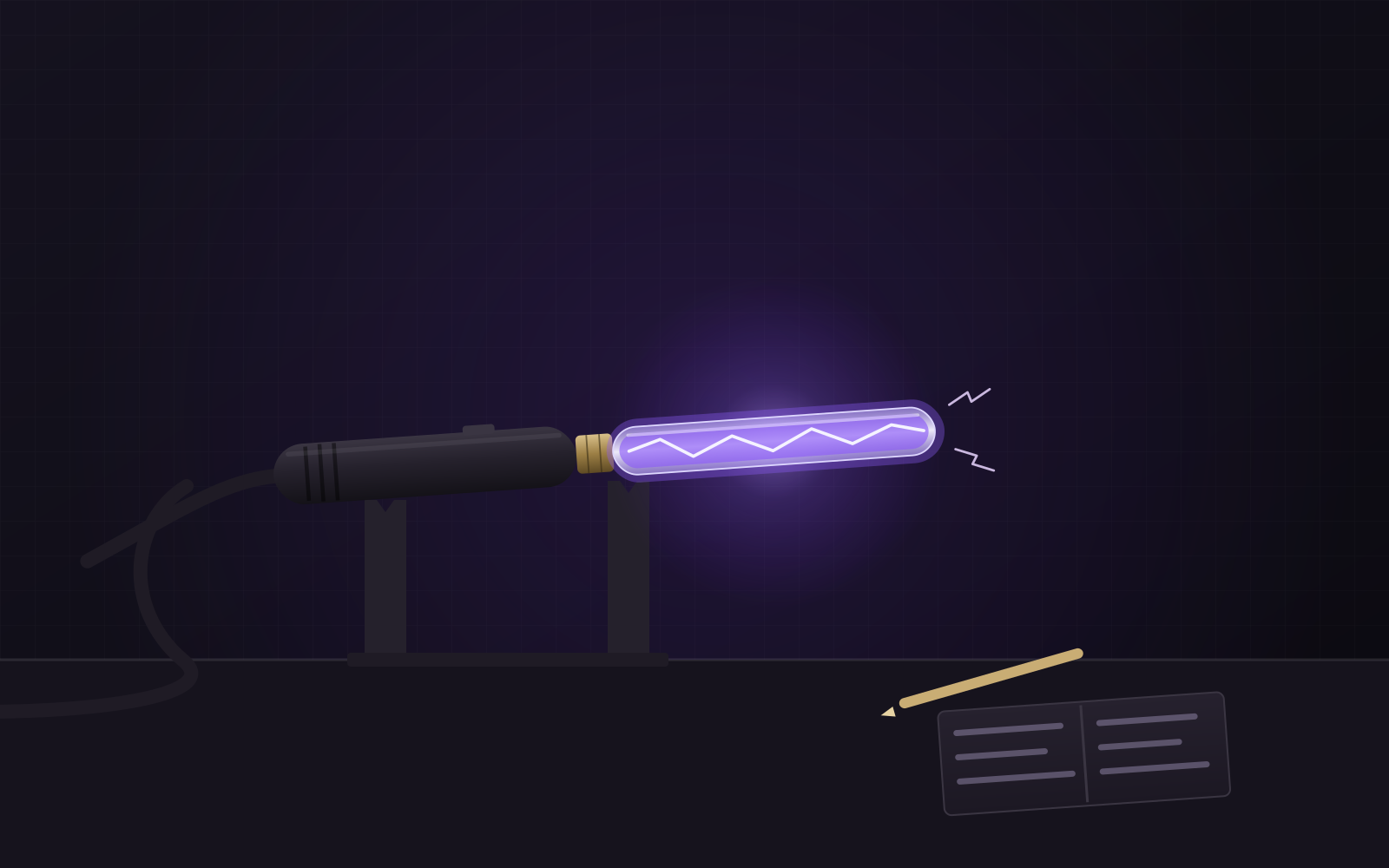
This guide is for a wand that has already been through a proper safety overhaul by a qualified person (see Violet Wand Safety). If yours hasn't, stop here and keep it as a display piece for now. Nothing below is about using a wand on a person. It's about watching it work, learning its quirks, and recording how it behaves.
Set up your bench#
- A clear, dry, non-flammable surface. No paper, rags, solvents, aerosols or hand sanitiser nearby. Sparks will find them.
- Good ventilation. Open a window. Running wands make ozone.
- An RCD-protected socket, or the isolation transformer your restorer recommended.
- A padded tray for electrodes waiting their turn.
- Nobody with a pacemaker or other implanted device in the room, and pets elsewhere.
- A notebook or your phone for recording what you see.
First power-up#
- Check the wand's voltage rating against your supply one last time.
- Fit a sound electrode you don't mind about. Keep your best glass in the case for now.
- Turn the control to its lowest setting.
- Hold the wand by the handle only, with the electrode pointing away from everything.
- Switch on and watch.
Expect a buzz, then a glow inside the electrode. Bring the control up slowly. The glow should brighten, and the buzz may change pitch.
Switch off after a minute or two and feel the handle. Gently warm is normal. Hot isn't.
Reading the glow#
- Even violet or purple throughout the tube: a healthy argon or mixed-gas electrode.
- Orange-red: a neon electrode. Perfectly normal if that's what it is.
- Faint, patchy or flickering that settles after a minute: common in electrodes that haven't run for years. See Charging Electrodes.
- Pale blue-white or pinkish haze, or a glow only at the very tip: the electrode may have lost its vacuum. Retire it.
- No glow at all: try a known-good electrode before blaming the wand.
Reading the buzz#
- A steady, even buzz is what you're after.
- A rough or stuttering buzz often points at worn interrupter contacts.
- Crackling inside the handle, or a smell of hot Bakelite or burning, means switch off and unplug straight away. Something is arcing where it shouldn't.
Sparks at the bench#
With the wand running, bring the electrode slowly towards a metal object, such as a large screwdriver held in its insulated handle, or an earthed metal plate. At a few millimetres a small spark will jump. Notice how the gap at which sparks start changes as you turn the control. It's a nice, simple way to compare output between wands and record it over time.
Keep the sparks brief. They're hot, they make ozone, and they can pit metal and electrode tips.
Keep a log#
For each session, jot down:
- date, wand and electrode used
- control setting
- glow colour and evenness
- buzz quality
- how warm the handle got, and after how long
- anything odd
A few sessions in, you'll know your wand's normal, and you'll spot it when something changes.
When to stop#
Switch off and unplug if you notice burning smells, smoke, a hot handle, crackling inside, a flickering mains light, or a cracked electrode. Then get it looked at again. How Long Can I Run My Violet Wand? covers rest breaks.