Body contact cables turn up quite often in mixed lots of violet wand gear, usually alongside modern wands. If you've found one and aren't sure what it is, this guide explains, along with where the idea came from.
What it is#
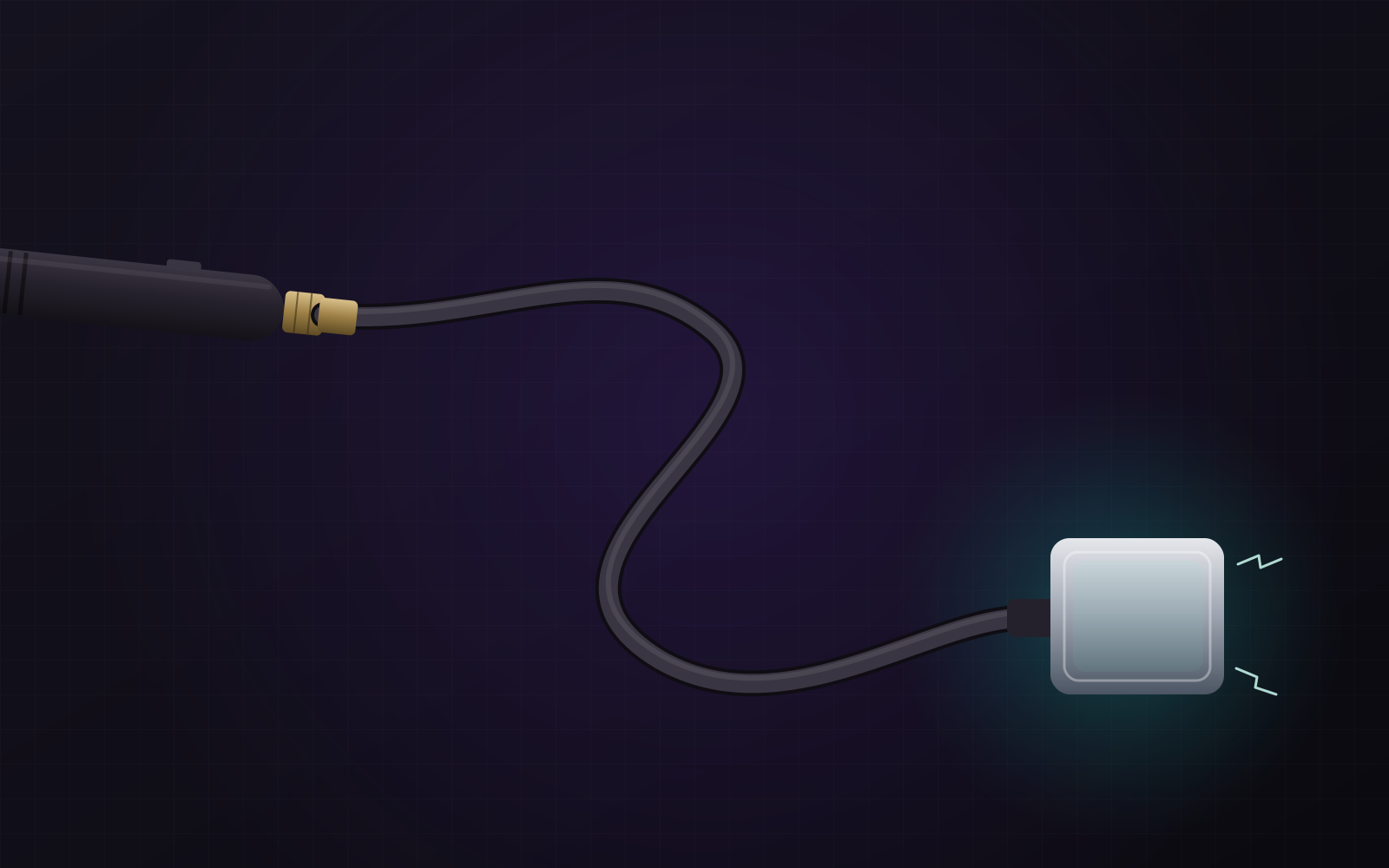
A body contact cable is a lead that plugs into the electrode socket of a violet wand in place of a glass electrode. At the other end is a metal contact: a plate, bar, clip or pad, meant to be held or touching someone. The wand's output runs through the cable to the contact, so the person holding the contact effectively becomes the electrode.
You'll recognise one by:
- a fitting at one end the same size as an electrode fitting
- a length of heavily insulated cable
- a metal plate, bar, wristband or clip at the far end
Where the idea came from#
The idea is old. Early twentieth-century violet ray leaflets sometimes showed an "indirect" method using a metal saturator: a bar or tube held by one person while the operator's hands drew sparks from their skin. The body contact cable is a modern descendant of the same idea. Finding an original saturator with a vintage set is uncommon, and it's a nice piece of history to record.
Why it needs special care#
Even as an object to identify and store, a body contact cable is worth handling thoughtfully:
- The insulation matters. The cable carries very high voltage. If the insulation is cracked, cut, kinked or perished, the voltage can escape along the way. Old or cheap cables are a particular concern.
- The contact is bare metal. Unlike a glass electrode, there's no gas or glass limiting the discharge. Sparks from a metal contact can be sharper and hotter.
- It's easy to confuse with other leads. Keep it clearly labelled and stored with the wand it belongs to.
Recording one#
If a body contact cable comes with a set, note:
- the fitting diameter and whether it fits the handle
- the cable length and the condition of its insulation along the whole length
- the type of contact at the far end
- any maker's markings
- whether it looks factory-made or homemade
Photograph any damage. A homemade cable, or one with damaged insulation, should be retired and labelled "do not use".
What this site doesn't cover#
Body contact cables are made for using a wand on people. This site doesn't cover that, and doesn't recommend using any violet wand on a person. Nothing here is a guide to using one.
The Violet Wand Safety guide covers the general hazards, including interference with pacemakers and other implants, which applies to anyone in the room with a running wand.